
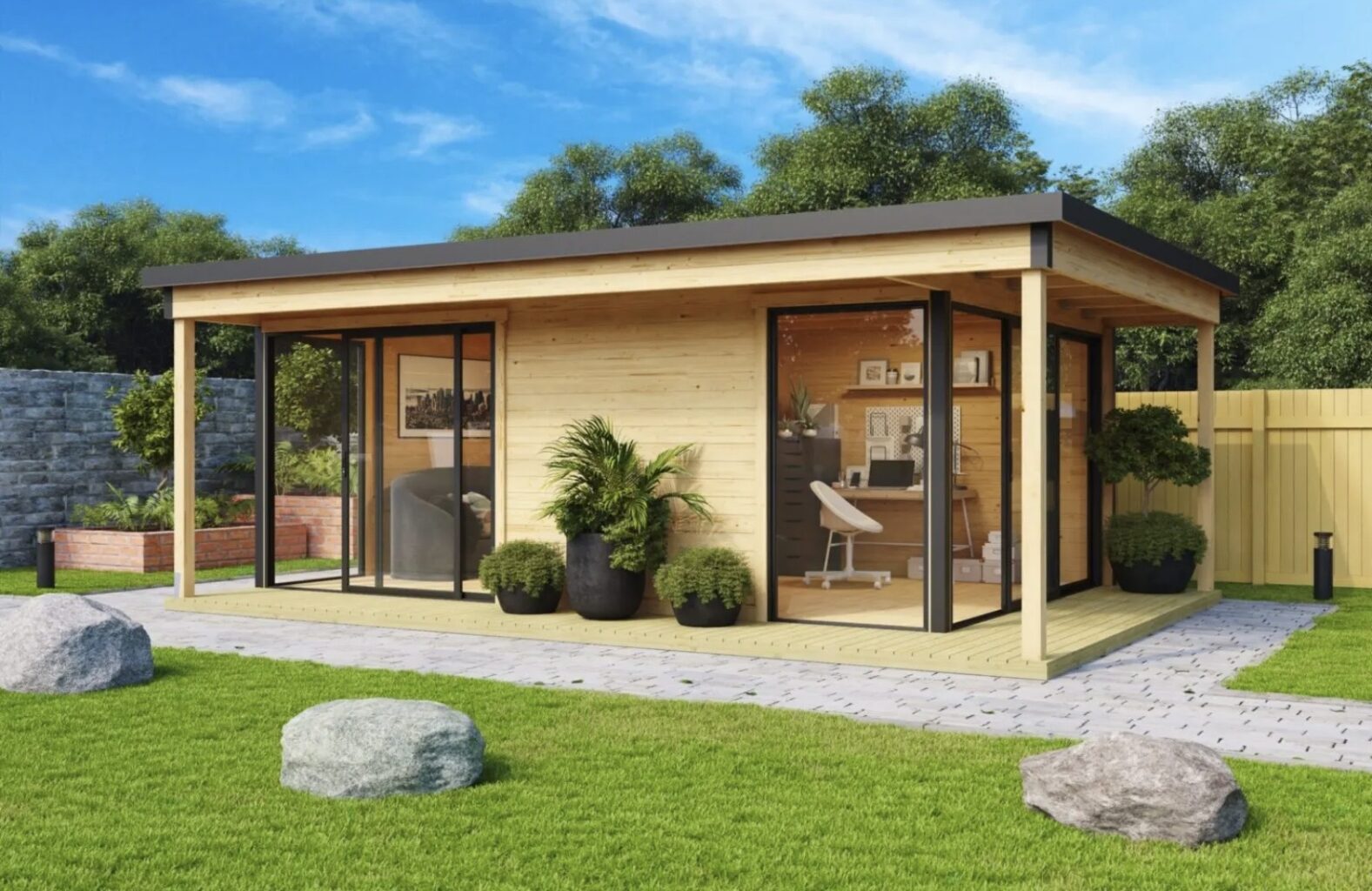

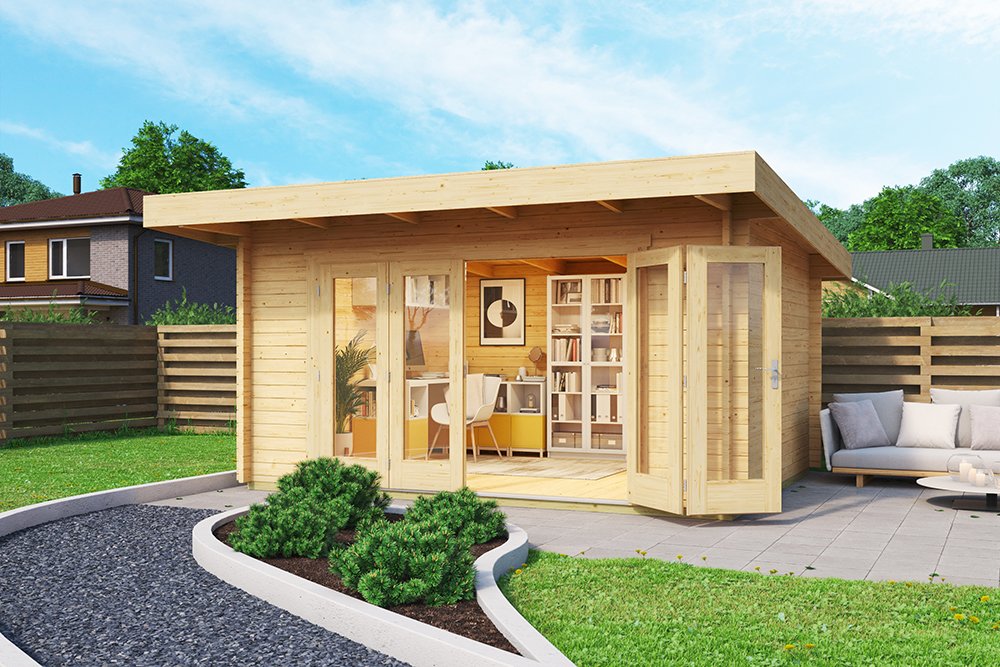
Sussex 1 Garden Office with Bifold Doors 4.0m x 3.0m
3.9m x 3.0m, Height: Under 2.5m, Wall Thickness: 44mm
Maximum light, space and access to the garden and fresh air!
From £3,895
Was £4,395 | Save £500
Pay just £500 deposit to secure – Call Us
Choosing between timber and composite garden buildings can feel confusing, especially when both materials offer practical benefits. In this guide, we compare the two fairly, looking at appearance, durability, maintenance, insulation, sustainability and long-term value, while helping you decide whether a traditional timber log cabin, garden room or summerhouse is the right choice for your home.
When you start looking for a new garden building, one of the first questions is usually about size, style and use. Will it become a home office, a summerhouse, a garden bar, a hobby room, a gym, a workshop or simply somewhere peaceful to relax? But there is another important decision to make too: what should the building be made from?
For many customers, the choice comes down to timber garden buildings vs composite garden buildings. Both can be attractive, useful and long-lasting when chosen carefully. Composite materials are often promoted for their low-maintenance qualities, while timber remains popular for its warmth, natural character, versatility and traditional garden appeal.
A composite garden room may suit someone who wants a very modern, manufactured finish with minimal repainting or treatment. A timber log cabin or wooden garden room, on the other hand, offers something more natural and adaptable. Timber has a warmth that is difficult to replicate. It softens the look of a garden, blends beautifully with planting and landscaping, and can be painted, stained or styled to suit both traditional and contemporary homes.
At Cabins Unlimited, we specialise in premium timber buildings, including log cabins, summerhouses, garden rooms, garden offices, workshops, corner cabins and bespoke timber structures. We believe timber remains one of the most practical, attractive and flexible choices for UK gardens, especially when the building is properly specified, installed and maintained.
That said, this is not about pretending composite buildings have no place. The right choice depends on your priorities. If your main concern is a low-maintenance external finish, composite may be worth considering. If you want natural materials, design flexibility, a traditional cabin feel and a building that can evolve with your garden over time, timber has a lot to offer.
The biggest difference between timber and composite garden buildings is the material itself. Timber is natural. It moves, breathes and changes slightly over time. Composite materials are manufactured, usually combining plastics, resins, fibres or engineered boards to create a more uniform product.
That difference affects almost everything else: appearance, maintenance, comfort, repairability, sustainability and long-term feel.
A timber garden building has natural grain, knots and warmth. No two buildings look exactly the same, which is part of the appeal. Timber can be treated in natural shades, painted in bold colours or finished to complement your home and garden. It can feel cosy, characterful and welcoming inside, especially when used as a garden office, summerhouse, studio or relaxation space.
Composite buildings tend to offer a cleaner, more consistent appearance. For some customers, that is exactly what they want. They can look neat, modern and low-maintenance. However, they may not offer the same natural feel as a timber cabin, particularly inside, and some composite finishes can feel more manufactured or less adaptable when customers want to personalise the space.
Maintenance is another key comparison. Timber does need care. A good-quality wooden garden building should be treated, protected and checked over regularly. Doors and windows may need occasional adjustment because timber moves naturally through the seasons. Composite buildings are often lower maintenance externally, although they still need cleaning, care and proper installation.
Where timber performs very well is flexibility. A timber building can be insulated, painted, adapted, fitted out and repaired more easily in many cases. If you want to turn your building into a year-round garden office, creative studio, workshop or multi-purpose cabin, timber gives you a very practical starting point.
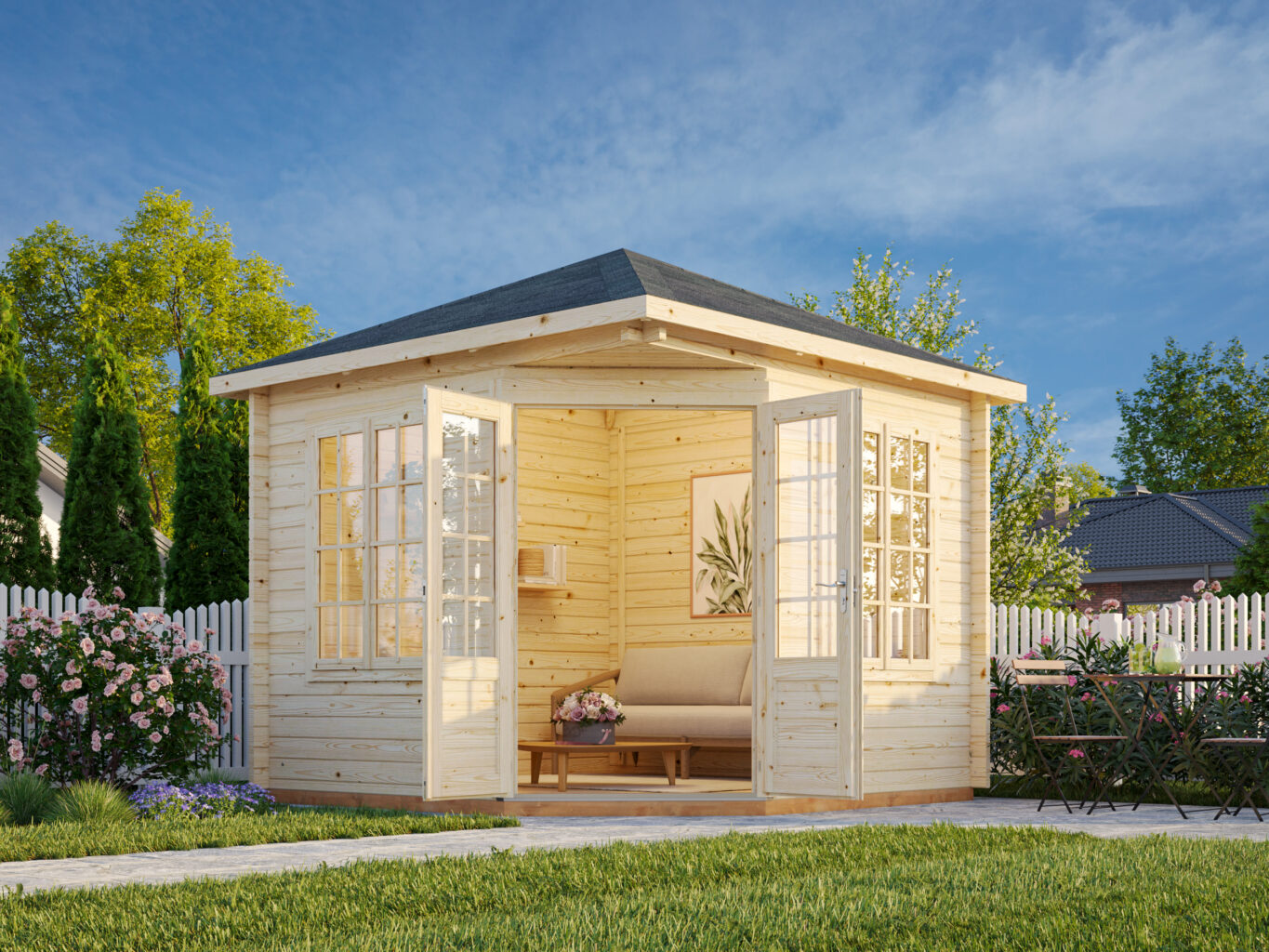
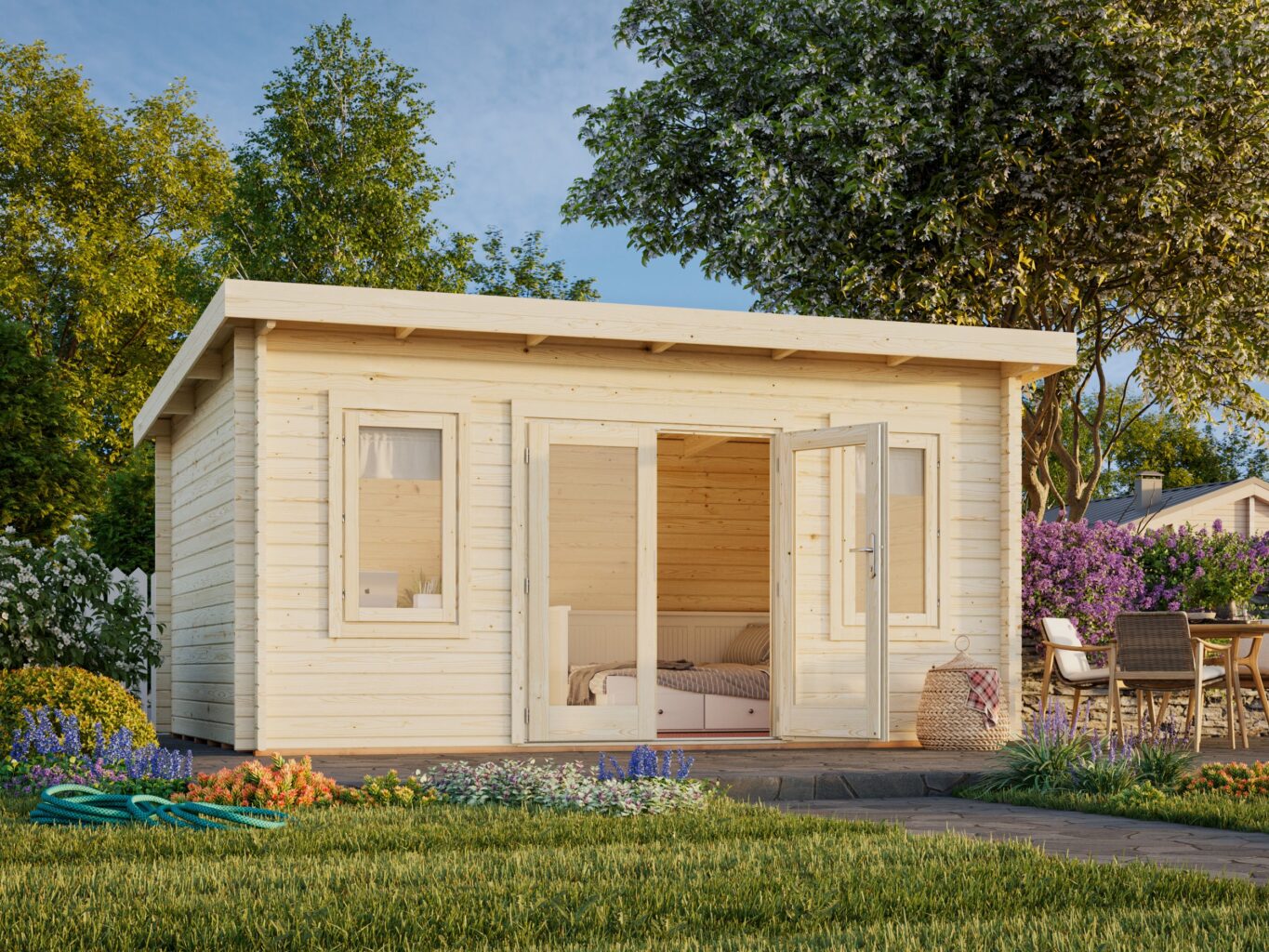
The Sussex Cabin Range is a useful example of how modern timber buildings can offer a contemporary look while retaining the benefits of natural timber. With a pent roof, glazed frontage and modern styling, it suits customers who like the clean lines often associated with composite garden rooms, but still want the warmth, adaptability and character of a timber cabin. The Sussex range is well suited to garden offices, leisure rooms, home gyms and stylish summerhouse spaces. Cabins Unlimited product information highlights the Sussex 2 as featuring bi-fold doors, tilt-and-turn windows and 44mm logs, making it suitable for use as a summerhouse, home office or home gym.
Maximum light, space and access to the garden and fresh air!
Large pent roof model – a perfect games room or home gym!
A garden building is not just something you look at from the kitchen window. It is a space you spend time in. That is why the feel of the building matters so much.
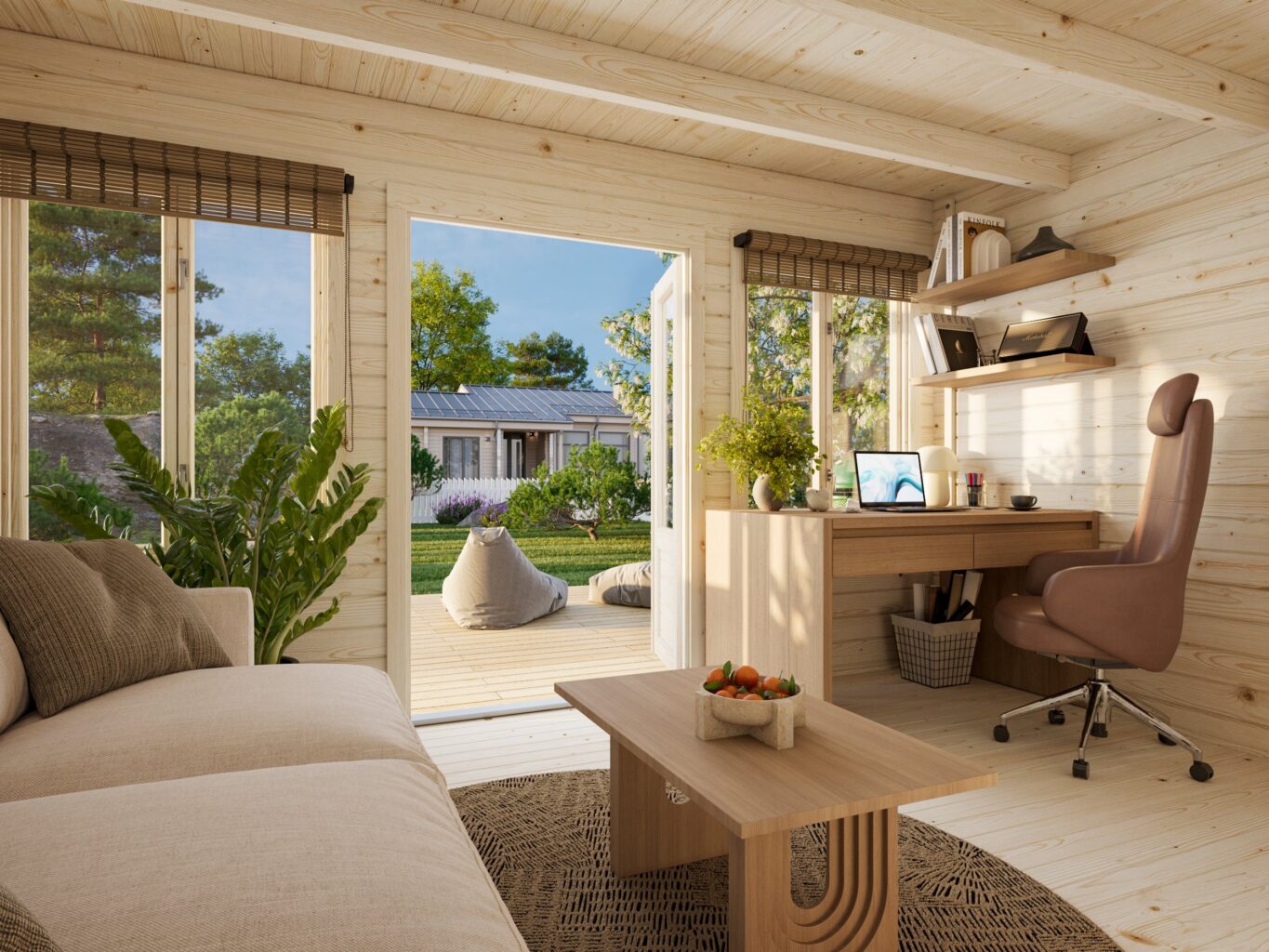
Timber has a natural warmth that many people immediately respond to. Inside a log cabin garden office or summerhouse, the timber walls create a softer, more relaxed atmosphere than many manufactured finishes. This can be especially valuable if the building is being used as a home working space, reading room, therapy studio, art room or retreat.
Composite buildings can look crisp and modern, but they do not always have the same tactile quality. Some customers love that clean, uniform appearance. Others find that timber feels more inviting and better connected to the garden. If your dream is a cosy cabin, a relaxing summerhouse, a traditional workshop or a natural-looking garden retreat, timber is often the more satisfying material.
Timber also gives you far more freedom with colour and finish. You can keep the look natural with a stain, choose a soft heritage shade, go bold with a painted exterior, or use contrasting colours for doors and windows. This makes it easier to match the building to your garden design, fencing, patio, planting or house style.
Comfort is closely linked to specification. A timber building can be upgraded with floor and roof insulation, suitable roof coverings, double glazing, internal finishes, heating and electrics. This makes it possible to create a practical insulated garden building for year-round use. For curved roof buildings and saunas, flexible insulation can also be used in wall areas where suitable.
The key point is that the building should be chosen for the way it will be used. A simple summer retreat does not need the same specification as a daily-use office. A hobby workshop may need more wall space and practical storage. A therapy room or customer-facing studio may need a smart finish, comfortable temperature control and a more polished interior.
This is where visiting a display site can be so valuable. Seeing buildings in person helps you compare the feel of timber, the amount of natural light, the internal height, the door positions and the overall scale. A website can show dimensions, but standing inside a real cabin makes the decision much easier.
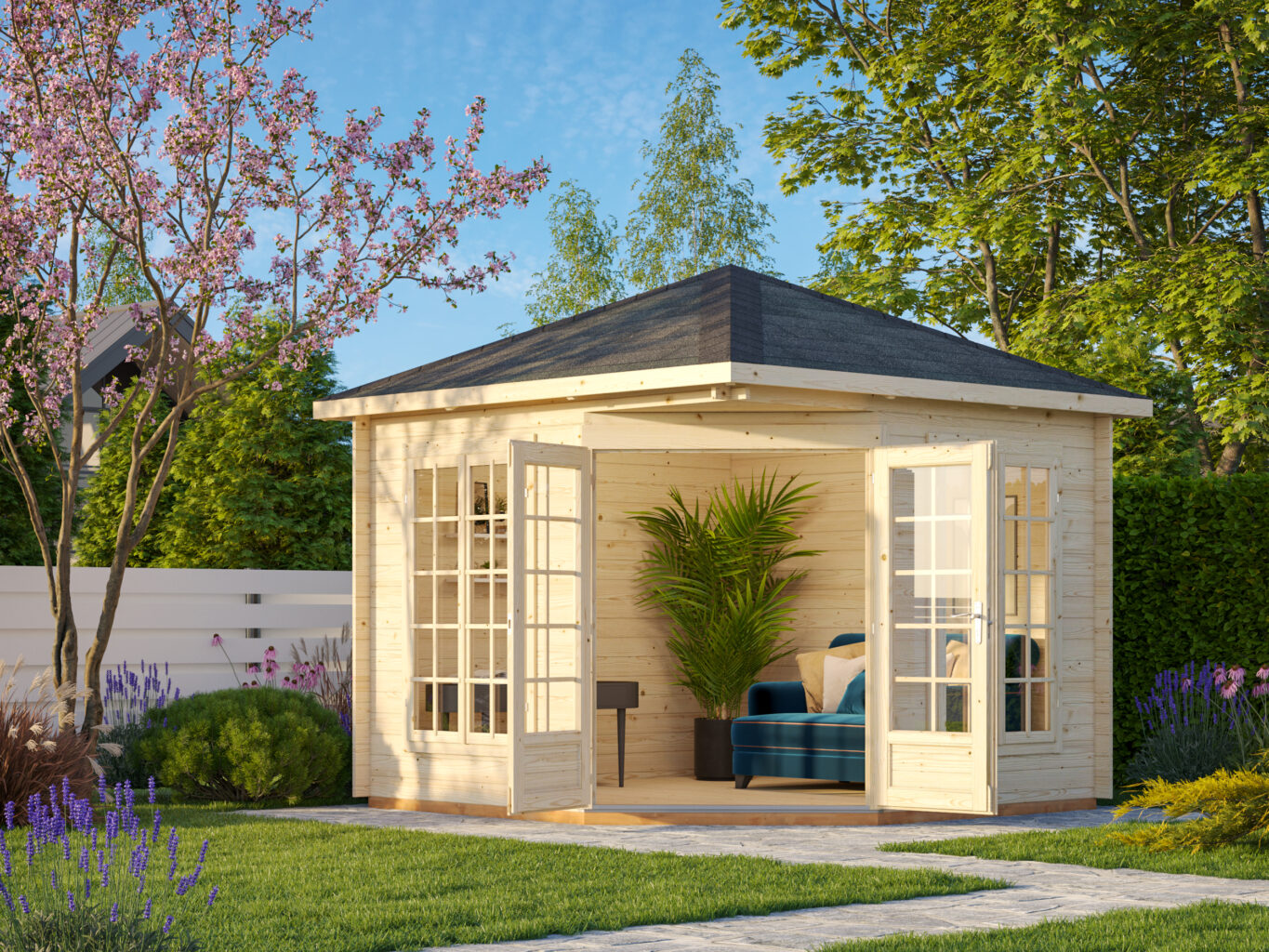
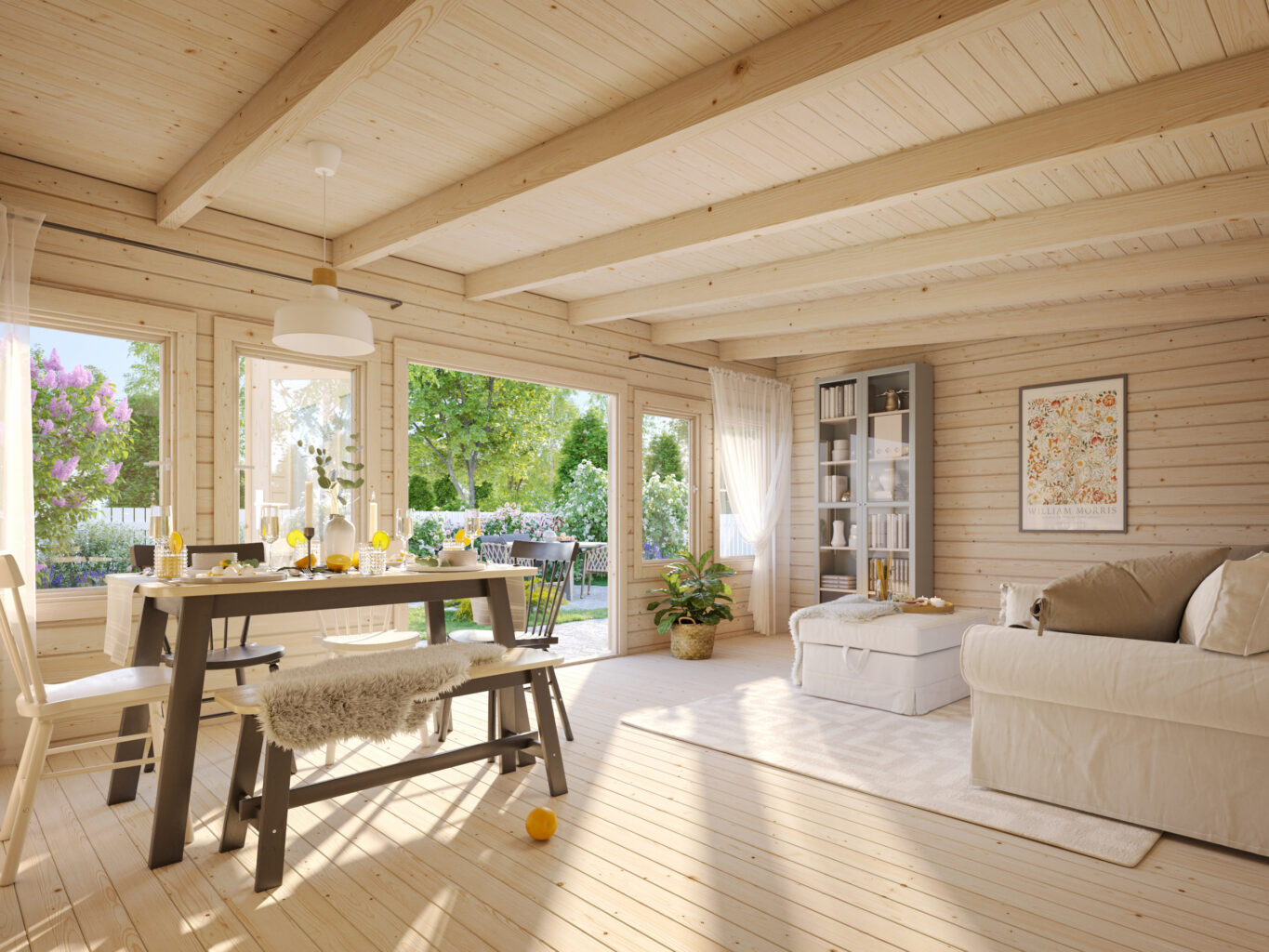
One of the most common reasons people compare composite garden rooms with timber garden buildings is maintenance. Composite products are often marketed as low-maintenance, and that can be attractive. If you want a surface that does not need timber treatment in the traditional sense, composite may seem appealing.
Timber does need looking after, but that should not be seen as a weakness. In many ways, maintenance is part of owning a natural product. With the right treatment and care, a high-quality timber building can look beautiful for many years. Regular maintenance also gives you the chance to refresh the colour, update the style and keep the building looking exactly how you want it.
A good timber care routine usually includes:
Composite buildings may reduce some of this work, but they are not completely maintenance-free. They still need cleaning, inspection, good drainage and proper care. Repairs may also be more complicated if a specific panel, colour or system becomes unavailable in future. Timber, by contrast, can often be repaired, adjusted, sanded, filled, treated or repainted more straightforwardly.
Durability depends less on a single material claim and more on overall quality. A well-built timber cabin on a suitable base, with good roof protection, correct treatment and proper installation, can be an excellent long-term investment. A poorly installed composite building can still suffer problems if the base, roof, drainage or ventilation are not right.
For many homeowners, the long-term value of timber is not just practical but emotional. A timber garden building can be part of the garden rather than just an object placed in it. It can be styled, softened with planting, repainted as tastes change and used for different purposes as family life evolves.
This flexibility is one of the big advantages of choosing a timber log cabin, summerhouse or garden room. It can begin as a home office, become a hobby room, later serve as a teenage den, and eventually turn into a calm space for relaxing or entertaining. A good timber building grows with you.
Sustainability is an important consideration for many customers choosing a garden room, log cabin or summerhouse. Both timber and composite materials can make environmental claims, but they do so in different ways.
Timber is a renewable natural material when responsibly sourced. It stores carbon as it grows, has a naturally warm appearance and can often be repaired or maintained rather than replaced. Cabins Unlimited’s log cabin category describes its range as being built from sustainable timber and available in multiple sizes and layouts for uses such as home offices, gyms and studios.
Composite materials can sometimes include recycled content, which is a positive feature. They can also reduce the need for repainting or retreatment. However, composites vary widely, and not all products are the same. Some may be difficult to recycle at the end of their life, depending on how the materials are bonded together.
For customers who value a natural look and a traditional building material, timber has an obvious appeal. It connects visually with lawns, trees, planting and outdoor living areas. It can be used for rustic cabins, contemporary garden offices, bespoke buildings, glamping pods, workshops and summerhouses. That range of uses is one reason timber remains so popular across UK gardens.
Cabins Unlimited also offers a wide range of timber summerhouses, with product category information describing high-quality, sustainably sourced timber and precision interlocking log construction. For customers who want a building that feels natural but still performs well, a properly specified timber cabin can offer a very good balance.
The most sustainable choice will always depend on the full picture: source materials, manufacturing, transport, installation, maintenance and lifespan. But for customers who want a repairable, adaptable and natural garden building, timber is still a very compelling option.
To be fair, composite garden buildings can make sense for some customers. If your priority is a very uniform modern look, minimal external repainting and a manufactured finish, composite may be worth exploring.
Composite may appeal if you:
Those are valid reasons. Some gardens and some homeowners suit that style very well.
However, it is also worth thinking about what you may give up. Composite buildings may not offer the same natural charm, internal warmth or easy adaptability. They can also feel less personal if you want a building that can be painted, styled and softened into the garden. If you enjoy the idea of a proper cabin, a timber interior, natural texture and a building that feels connected to the outdoors, timber is likely to be more rewarding.
Because Cabins Unlimited specialises in timber buildings, our advice naturally comes from that experience. We are not trying to claim timber is the answer for every single customer. But if you are looking for a beautiful, flexible, characterful garden building with a wide choice of sizes, layouts and uses, timber is very hard to beat.
For UK homeowners, timber remains one of the most versatile choices for garden buildings. It works in traditional cottage gardens, modern landscaped spaces, family gardens, rural plots and commercial settings. It can be simple or premium, compact or spacious, standard or bespoke.
A timber building can become:
That flexibility matters. Many customers start with one idea and discover the building can support several uses. A timber garden room might be used as an office during the week, a family space at weekends and a quiet retreat in the evenings.
Another important advantage is choice. Cabins Unlimited offers a wide selection of timber buildings, from log cabins and garden offices to summerhouses, sheds, saunas, workshops and glamping pods. The Garden Rooms category also positions the range as part of one of the UK’s largest selections of timber buildings.
For customers who want something quickly, the in-stock buildings category includes log cabins, summerhouses, garden rooms and garden offices ready for faster delivery. For those with specific requirements, bespoke timber buildings can be designed around size, layout, doors, windows and intended use.
This is where timber really comes into its own. It gives customers options. You can choose a standard model, adapt the specification, add insulation, select roofing, pick colours, include installation and create a building that genuinely works for your garden and lifestyle.
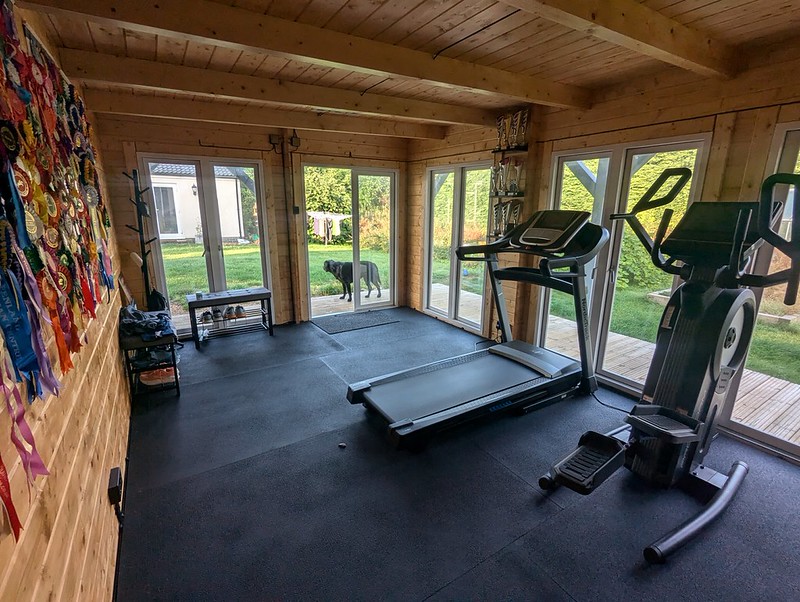
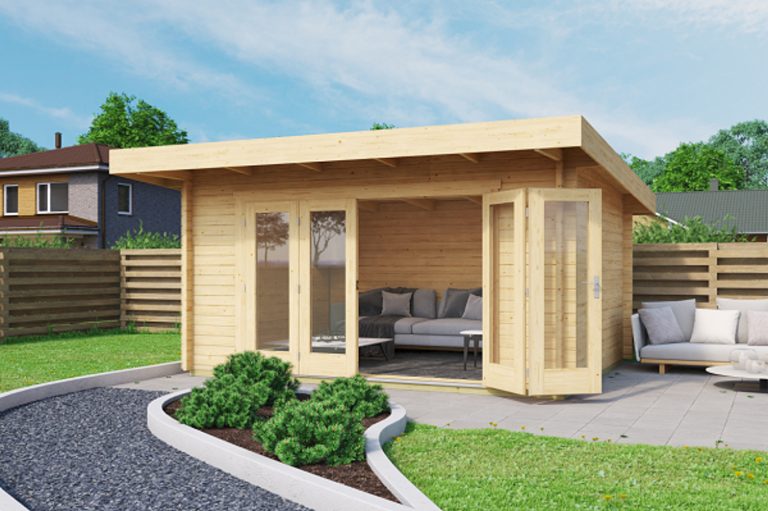
Modern Garden Cabin with Large Window Facade
Maximum light, space and access to the garden and fresh air!
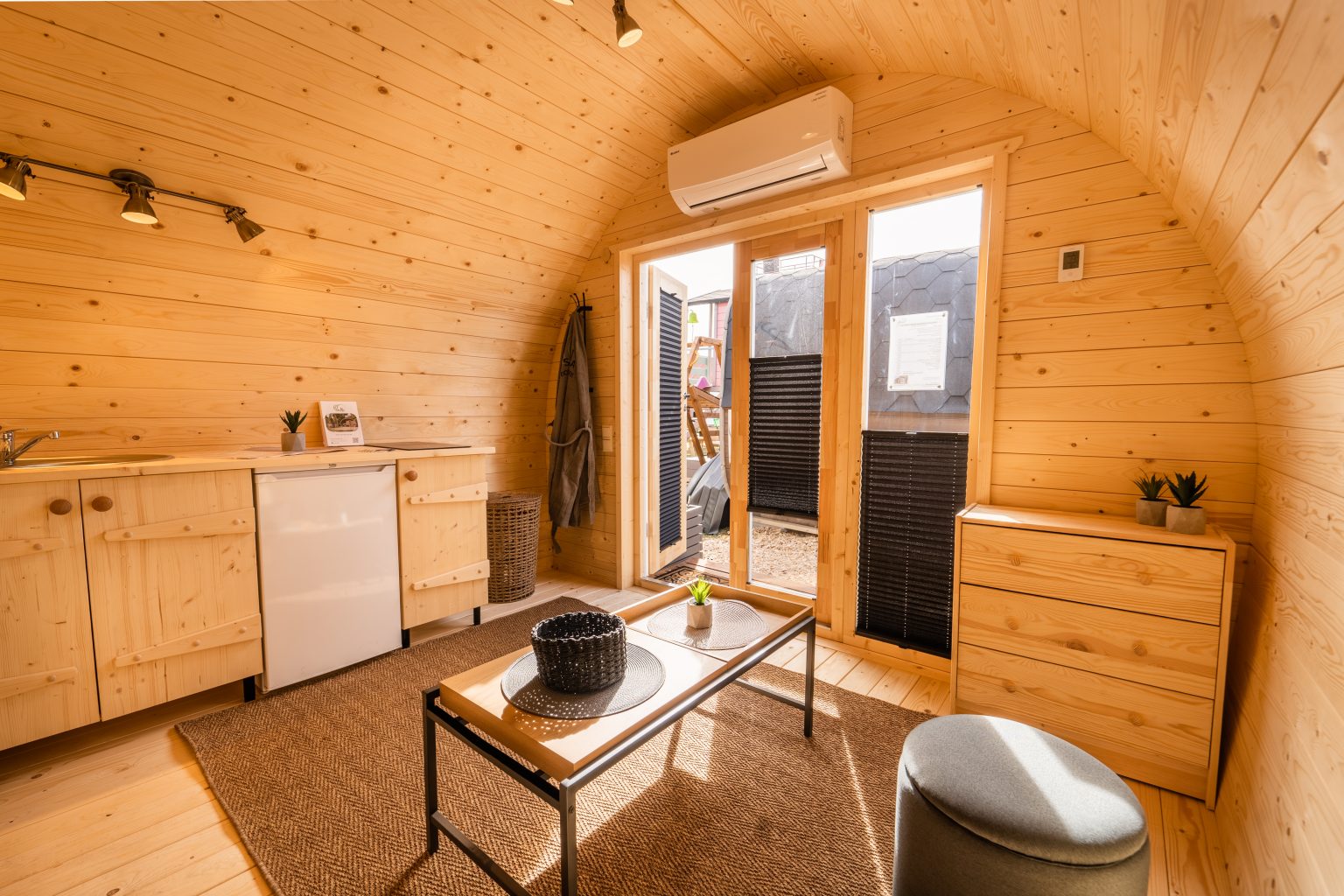
Modern Cube Pod with Extended Roof Overhang Area
Small but spacious and so relaxing!
Thicker 70mm Logs to maximise the warmth


